

Weightlifting Technique Checks: Bench Press, Squat, and Pulldown
 When you have been lifting for a while, it is easy to focus on the next weight increase and forget the setup. These checks cover three familiar gym movements: bench press, squat, and pulldown.
Good decisions can help manage training risk, but no form checklist guarantees you will avoid injury. Use loads and ranges you can control, and get qualified help with unfamiliar lifts.
Bench press: make the setup secure
- Use a stable bench and correctly positioned rack safeties. Use a competent spotter when needed.
- Wrap your thumbs around the bar rather than relying on a thumbless grip.
- Choose a grip that lets you keep your wrists and forearms supported through a comfortable range.
- Keep your feet planted and your upper body steady. Lower under control without bouncing.
A natural lower-back curve does not by itself prove that the weight is excessive. The concern is losing your position or forcing an extreme setup you cannot control. If the bar path or body position changes sharply to finish the rep, reduce the load.
Squat: do not treat your toes as a danger line
Knees moving beyond the toes is not automatically an injury. Body proportions, stance, depth, and the squat variation affect the movement. Forcing everyone’s knees to stay behind the toes can shift more demand elsewhere.
A small biomechanics study of knee position illustrates how restricting knee travel changes joint loading. It does not prove one technique is safe for every person.
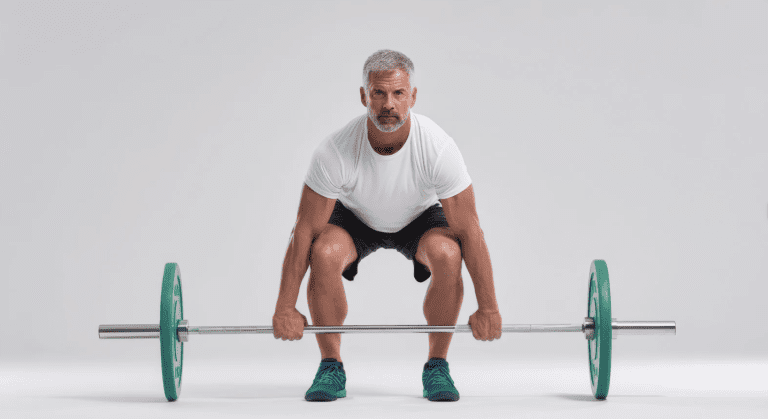
Use a comfortable stance, keep your feet planted, and let the knees follow the general direction of your toes. Lower only through a range you can control without pain. If balance or depth is a problem, start with the chair-squat options in the beginner leg guide.
Pulldown: keep the load from moving you
Adjust the seat and thigh pad to your body. Pull toward the upper chest, not behind the neck. Use a comfortable grip and keep the return controlled. If you are swinging backward or lifting off the seat to finish, choose less weight.
Run a quick check before adding weight
| Question | If the answer is no |
|---|---|
| Is the equipment setup secure? | Fix it before starting |
| Can I repeat the same controlled range? | Keep or reduce the load |
| Am I recovering between sessions? | Review workload and rest |
| Is the movement comfortable? | Stop and assess the symptom |
Sharp pain, numbness, dizziness, chest symptoms, or unusual breathlessness are reasons to stop. Persistent joint or back symptoms deserve assessment, not a harder set.
For a structured return, see the beginner and returning-lifter guide. The 31-Day Reboot includes beginner machine workouts, meals, and grocery lists.


The imaginary chair idea which you gave for the squats is really nice. I started with squats by leaning my back to a wall and gradually going down into a sitting position.
You are right dude. If we are arching when we lift the barbell from the safety rack, then that means we are lifting too much more weight than we should. This is the one thing our instructor never fails to mention at least once everyday.
More than anything else I get surprised when people get injured from using a bench press. And all of that are for the same reason which is they lose the grip due to sweaty hands. I mean, come on.. have at least the minimum common sense to wipe the sweat off your hands.
The newbies always try to get good muscles like just with a snap. They always tend to life over-weights for that and end up injuring themselves.
I have saved at least 5 such boys from getting a serious injury due to lifting overweights.
“Dead man’s grip”.. Damn that thing. That day I was working out at gym with other people as usual. One man there was lifting the barbells with that dead man’s grip..he does that everyday and nothing new about it. But that day, he lost grip and the barbell went right on his neck. Man was dead on the spot.
I did not know about the problems that can be caused due to squats, though I have been doing squats. Thank you for the heads up. I will keep these things in mind next time I do a squat.
Great things that you have shared over here. Keeping yourself away from injury are as important as getting in a good shape. Thank you for sharing this information.
No matter how confident I am about my strength, I always have someone beside me for the support whenever I am trying to do weight lifts. I have never got an injury due to lifting over-weight till date, but I don’t wanna talk chances.
Ahhh.. bad memories come to me when I see the work squat.. Two years back during my regular workout, I tried holding weights while doing squats. I almost broke my knee that day :(
Lifting too heavy weights can do more bad than good. It is very important to know how much to lift or it can cause injuries. The neophytes tend to do this mistake often.
I have seen many people, mostly newbies, getting an injury because of the pull downs. The newbies are too eager and over-excited to gain muscles quick and put on too much weight, on pull downs, than what they can handle.