

Gym Memberships Are Part Of The Journey
Gym Memberships Are A Great Investment In You
 Have you been putting off joining a gym or questioning whether gym memberships are really worth the cost. You are not alone. Many people hesitate because they feel intimidated by unfamiliar machines, crowded weight rooms, or the idea that they will not know what they are doing. Others prefer the comfort of working out at home or feel that adding another monthly expense is unnecessary. On the surface, these concerns make sense. But when you look deeper at the research and the psychology behind exercise habits, the benefits of training in a gym environment become much clearer.
One of the biggest advantages of exercising in a gym is consistency. Numerous studies show (see sources below) that people who belong to a gym are far more likely to stick to a regular workout routine than those who try to exercise on their own. Structure matters. When you have a physical place dedicated to training, it removes many of the daily excuses that derail progress. Home workouts often compete with distractions like television, phones, chores, or family responsibilities. A gym, by design, exists for one purpose. When you walk through the door, your mindset shifts from thinking about exercise to actually doing it.
Research supports this idea. Studies have found that individuals with gym memberships are significantly more likely to meet weekly exercise recommendations and maintain higher overall fitness levels. One well known study conducted by researchers at Iowa State University followed approximately 400 adults over several months. Half of the participants had access to gym memberships, while the other half did not. The results showed that those with gym access demonstrated better fitness outcomes, improved strength, and more consistent training habits.
The lead researcher, Duck Chul Lee, suggested that access to a wide range of equipment played a major role. Gyms provide barbells, dumbbells, machines, cables, and cardio equipment that most people simply do not have at home. This variety allows you to progressively challenge your muscles, target different movement patterns, and avoid plateaus. While bodyweight exercises like push ups, pull ups, and dips are effective, they often become limited over time unless you continuously increase volume or difficulty. For many people, that progression eventually stalls.
Variety is not just about physical results. It also affects motivation. Doing the same workout in the same space day after day can feel repetitive and uninspiring. Gyms offer new equipment, different training zones, and an environment filled with people working toward similar goals. That atmosphere can be incredibly motivating, especially on days when your energy is low. Simply being around others who are training seriously can push you to work harder than you would alone.
Another major benefit of gym training is accountability. Working out at home makes it easy to skip sessions. You tell yourself you will train later, then later turns into tomorrow. Driving to a gym creates a psychological commitment. Once you have taken the time to get there, the odds of completing your workout increase dramatically. This effect becomes even stronger if you train with a partner or follow a structured program. Knowing that someone expects you to show up or that your workout is already planned removes decision fatigue and excuses.
Gyms also support better training efficiency. When you have access to all the equipment you need, you can move smoothly from exercise to exercise without improvising. A well designed gym workout includes resistance training that challenges major muscle groups, improves joint stability, and supports long term health. Strength training is especially important as we age, since it helps preserve muscle mass, bone density, and metabolic health. Many people underestimate how difficult it is to train effectively at home without proper loading options.
That said, gym memberships do not automatically guarantee results. Simply paying a monthly fee does not make anyone fitter. The real benefit comes from using the gym intentionally. That means walking in with a plan, knowing which exercises you will perform, and focusing on your workout rather than socializing or wandering aimlessly. Time in the gym should be purposeful. When you treat it that way, even a few sessions per week can produce meaningful results.
There is also a long term mindset shift that happens when you commit to regular gym training. You begin to see exercise as a non negotiable part of your routine rather than something optional. Over time, that consistency builds confidence. You learn how your body moves, how to adjust weights, and how to push yourself safely. What once felt intimidating becomes familiar. That confidence often carries over into other areas of life, including discipline, energy levels, and mental resilience.
Ultimately, the decision to join a gym comes down to what helps you stay consistent. For many people, gym memberships provide structure, variety, accountability, and an environment that supports long term success. While home workouts can work for some, the evidence strongly suggests that a gym setting makes it easier to show up, stay motivated, and continue progressing. If your goal is lasting fitness rather than short term motivation, a gym may be one of the smartest investments you can make in your health.
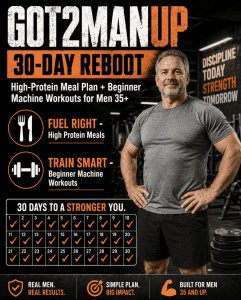
Ready to stop guessing and start transforming? Get all 13 complete fitness resources—including the Keto Recipe Videos—in the All-In-One GOT2MANUP Fitness Blueprint today and finally start your reboot –
Sources
-
Iowa State University. Exercise behavior and gym access research.
https://www.iastate.edu/news/2015/10/21/exercisehabits -
American College of Sports Medicine. Benefits of resistance training.
https://www.acsm.org/education-resources/trending-topics-resources/resource-library/detail?id=0c96fd2b-1f6a-4c49-9d7a-8a50d4f0a8b5 -
Centers for Disease Control and Prevention. Physical activity guidelines for adults.
https://www.cdc.gov/physicalactivity/basics/adults/index.htm -
National Institutes of Health. Strength training and health outcomes.
https://www.ncbi.nlm.nih.gov/pmc/articles/PMC6279907/
FAQs
1. Are gym memberships really worth the cost?
Gym memberships can be worth the cost if they help you stay consistent, motivated, and committed to regular exercise over the long term.
2. Can I get fit without gym memberships?
You can get fit without gym memberships, but many people find it harder to stay disciplined and progress without the structure and equipment a gym provides.
3. Why do people quit working out at home?
Most people quit home workouts because of distractions, lack of accountability, and limited progression options that make training feel repetitive.
4. How often should I go to the gym?
For most adults, three to five gym sessions per week that include resistance training and movement are enough to see steady progress.
oblem I see with working put at home is it’s too easy to blow off your workout. Driving to a gym is a commitment. Once you are there, you have committed to working out. Especially if you have a workout buddy, you will not want to let them down so you are much more likely to show up. You should have a plan when you get there to perform some kind of resistance/strength training. You should have your exercises planned, moving directly from one to the other, not standing around talking to people.
Gym memberships do not guarantee physical fitness but you can see the benefits and stick to a pan. What do you think? Please comment below.