
Strength Training for Men Over 40: Why Cardio Alone Is Failing You
 Introduction: The Cardio Trap That’s Keeping You Stuck
You are yet to join a gym but you have been running, c ycling. Hitting the elliptical religiously. You’re consistent, disciplined, and determined. Yet when you look in the mirror, the results don’t match the effort. Your pants might fit a little better, but you still see soft tissue around your midsection. Your arms lack definition. Your chest seems to be disappearing while your waistline persists.
If this sounds familiar, you’re not alone. Millions of men over 40 follow cardio-dominant exercise routines believing they’re doing everything right for fat loss and health. The reality is more complicated, and potentially discouraging if you don’t understand what’s happening to your body.
Incorporating strength training for men over 40 into your routine can dramatically improve your results.
The truth is that strength training for men over 40 isn’t just another fitness option; it’s a biological necessity that cardio alone cannot fulfill. After 40, your body undergoes fundamental changes in muscle mass, metabolic rate, and hormonal balance, making traditional cardio-focused approaches increasingly ineffective and, in some cases, counterproductive. Strength training for men over 40 is essential to combat these changes.
This article explains why cardio alone fails men in their 40s and 50s, what’s happening inside your body as you age, and how strength training for men over 40 addresses these changes in ways that running or cycling simply cannot. More importantly, you’ll learn a practical, sustainable approach to incorporating resistance training into your routine, even if you’ve never touched a weight before.
The Biology of Aging: What’s Actually Happening After 40
Understanding why strength training for men over 40 is critical begins with understanding sarcopenia, the age-related loss of muscle mass and strength. Research published in the Journal of Applied Physiology indicates that adults lose approximately 3-8% of muscle mass per decade after age 30, with the rate accelerating after 60. For sedentary individuals, this loss is even more pronounced.
This muscle loss isn’t just cosmetic. Muscle tissue is metabolically active, meaning it burns calories even at rest. When you lose muscle, your basal metabolic rate declines. According to research from the National Institute on Aging, this metabolic slowdown can reduce daily caloric expenditure by 150-200 calories per decade, a significant shift that explains why the same eating habits that worked in your 30s now lead to gradual weight gain. It’s a good time to learn how your daily habits impact aging.
This is why strength training for men over 40 is crucial for maintaining muscle mass and metabolic health.
Simultaneously, testosterone levels decline by approximately 1% per year after age 40 in most men. Lower testosterone contributes to reduced muscle protein synthesis, increased fat storage (particularly visceral fat), decreased energy levels, and diminished recovery capacity. This hormonal shift makes building and maintaining muscle progressively more challenging without deliberate intervention.
Insulin sensitivity also tends to decrease with age, particularly when muscle mass declines. Since muscle tissue is the primary site for glucose disposal, less muscle means reduced capacity to manage blood sugar effectively. This creates a metabolic environment conducive to fat storage rather than fat burning.
These changes aren’t inevitable endpoints, they’re trajectories that can be significantly altered through appropriate exercise intervention. But here’s the critical point: cardio alone doesn’t adequately address any of these fundamental age-related changes.
Why Cardio Alone Creates the “Skinny Fat” Problem in Men Over 40
Cardiovascular exercise has undeniable health benefits. It improves heart health, enhances endurance, supports mental wellbeing, and burns calories during the activity. However, when cardio becomes your primary or exclusive form of exercise after 40, several problems emerge.
First, excessive cardio without adequate resistance training accelerates muscle loss rather than preventing it. When you perform steady-state cardio in a caloric deficit, which most men do when trying to lose fat, your body adapts by becoming more efficient. Part of this adaptation involves reducing metabolically expensive tissue: muscle. Research in the American Journal of Clinical Nutrition demonstrates that caloric restriction combined with aerobic exercise alone results in significant lean mass loss alongside fat loss.
This creates the “skinny fat” phenomenon: you lose weight on the scale, your clothes fit looser, but you lack muscle definition and still carry stubborn fat deposits. Your body composition – the ratio of muscle to fat – remains poor despite weight loss. You may weigh less, but you don’t look leaner or more athletic.
Second, cardio provides minimal stimulus for muscle protein synthesis. While cardio exercises your cardiovascular system, it doesn’t create the mechanical tension and metabolic stress required to trigger muscle growth or even adequate muscle maintenance. After 40, when your body’s natural muscle-building signals are already declining, you need a powerful stimulus to preserve what you have. Cardio doesn’t provide that stimulus.
Third, excessive cardio can elevate cortisol levels, particularly when combined with inadequate recovery or caloric restriction. Chronically elevated cortisol promotes muscle breakdown, increases abdominal fat storage, and can suppress testosterone production, exactly the opposite of what men over 40 need.
The fundamental issue is that cardio addresses symptoms (excess calories, cardiovascular conditioning) without addressing the root cause of metabolic decline: loss of muscle mass. You’re running on a treadmill, literally and metaphorically, trying to outpace a biological process that requires a different solution entirely.
The Compelling Case for Strength Training for Men Over 40
Understanding the benefits of strength training for men over 40 can transform your fitness journey.
Strength training for men over 40 directly counteracts every major age-related metabolic challenge men face. Unlike cardio, resistance training provides a powerful stimulus for muscle protein synthesis, triggering the cellular mechanisms that build and preserve muscle tissue.
When you lift weights or perform resistance exercises, you create microscopic damage to muscle fibers. Your body responds by repairing these fibers and making them stronger, a process that requires energy, elevates metabolism, and maintains or increases lean body mass. This process, called muscle hypertrophy when it results in growth, is possible at any age with appropriate training.
Research published in Medicine & Science in Sports & Exercise confirms that strength training for men over 40 can build significant muscle mass and strength through progressive resistance training.
The metabolic benefits of strength training extend far beyond the workout itself. While cardio burns calories primarily during the activity, strength training creates an “afterburn effect” (excess post-exercise oxygen consumption) that elevates metabolism for up to 48 hours after training. More importantly, the muscle tissue you build becomes a permanent calorie-burning engine, increasing your resting metabolic rate every single day.
Studies show that adding just 10 pounds of muscle can increase daily caloric expenditure by 50-100 calories without any additional activity. Over time, this metabolic advantage makes fat loss easier and weight maintenance far more sustainable.
Strength training for men over 40 also improves insulin sensitivity more effectively than cardio alone.
Perhaps most importantly for men over 40, strength training supports hormonal health which also aids in fighting chronic inflammation. While exercise alone won’t reverse age-related testosterone decline, resistance training stimulates testosterone and growth hormone release more effectively than steady-state cardio. These anabolic hormones support muscle growth, fat metabolism, energy levels, and overall vitality.
Beyond body composition, strength training provides crucial benefits for longevity and quality of life. It increases bone density, reducing osteoporosis risk. It improves functional strength for daily activities. It enhances joint stability and reduces injury risk. It supports cognitive function and mental health. These benefits become increasingly important as you age.
Cardio’s Proper Role: Supporting, Not Leading
Incorporating strength training for men over 40 as a primary focus will yield better overall results.
This isn’t an argument against cardiovascular exercise. Cardio has legitimate value for heart health, stress management, active recovery, and overall caloric expenditure. The problem isn’t cardio itself, it’s the cardio-dominant approach that neglects strength training.
The optimal fitness approach for men over 40 positions strength training for men over 40 as the foundation, with cardio as a supporting element.
Moderate-intensity cardio sessions of 20-30 minutes, performed 2-3 times weekly on non-lifting days or after strength workouts, provide cardiovascular benefits without excessive cortisol elevation or recovery interference. Walking, cycling, swimming, or rowing at conversational pace supports heart health and aids recovery without the muscle-wasting effects of excessive training.
High-intensity interval training (HIIT) can also complement strength training when used judiciously – perhaps once weekly – but it requires adequate recovery and shouldn’t compete with your resistance training priorities. Remember: cardio should enhance your results, not compromise them.
Getting Started: A Beginner-Friendly Approach to Strength Training
If you’re new to strength training for men over 40, the prospect of walking into a weight room can feel intimidating. The good news is that you don’t need to be an expert to begin, and you don’t need to start with complex exercises.
Starting with strength training for men over 40 can be approachable and rewarding.
Begin with machines. Weight machines provide stability, guided movement patterns, and adjustable resistance that allows you to learn basic movement patterns safely. Focus on compound movements that work multiple muscle groups: chest press, lat pulldown, leg press, seated row, and leg curl machines. Perform 2-3 sets of 8-12 repetitions for each exercise, using a weight that feels challenging but allows you to complete all reps with good form.
Train 2-3 times per week initially, allowing at least one day of rest between sessions. This frequency provides adequate stimulus for adaptation while ensuring sufficient recovery time. As you become more comfortable and your recovery capacity improves, you can progress to 3-4 weekly sessions.
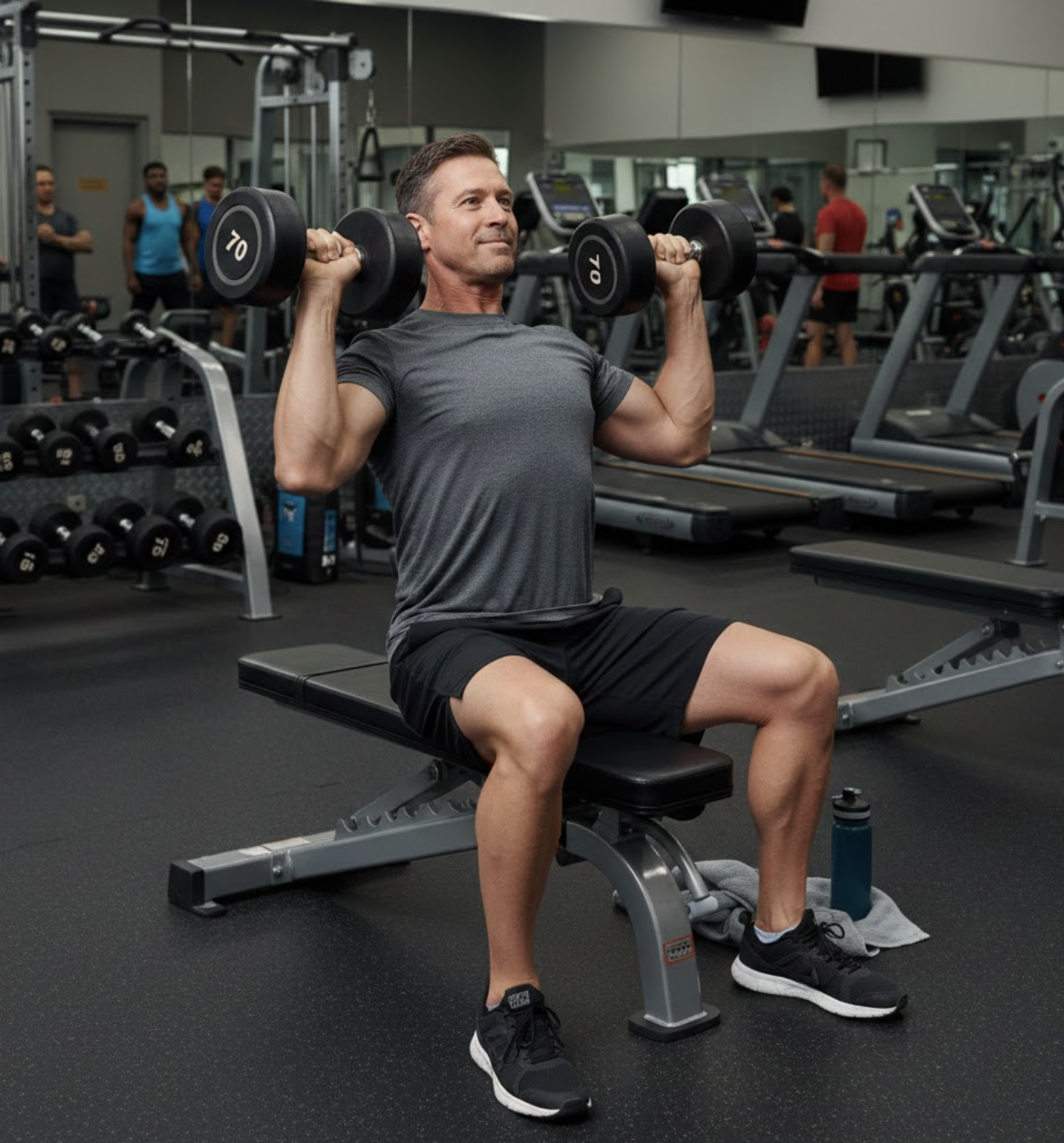
After 4-6 weeks of machine-based training, gradually introduce free weight exercises. Dumbbells are less intimidating than barbells and allow for natural movement patterns. Exercises like goblet squats, dumbbell chest press, dumbbell rows, and dumbbell shoulder presses build functional strength and engage stabilizer muscles that machines don’t challenge.
Eventually, you may progress to barbell exercises like squats, deadlifts, and bench presses, which provide maximal muscle-building stimulus. However, these aren’t mandatory, especially if you have mobility limitations or injury concerns. Many men achieve excellent results with dumbbells and machines alone.
Proper form always takes precedence over weight lifted. Moving resistance through a full range of motion with control builds muscle more effectively than using excessive weight with poor form. Consider working with a qualified trainer for several sessions to learn correct technique and develop a sustainable program.
Progressive overload – gradually increasing the challenge over time – drives continued adaptation. This might mean adding weight, performing more repetitions, or improving movement quality. Small, consistent progress compounds into significant results over months and years.
Sustainability: The Long Game of Strength Training After 40
One of the most compelling aspects of strength training for men over 40 is its sustainability. Unlike aggressive cardio programs or restrictive diets that rely on willpower and that lead to yo-yo dieting due to eventually burnout, strength training becomes increasingly rewarding over time.
Strength training for men over 40 is a long-term commitment that pays off in many aspects of health and well-being.
As you build strength, everyday activities become easier. Carrying groceries, playing with grandchildren, maintaining your home, participating in recreational activities or finding lazy ways to burn more calories, all requiring less effort. This functional improvement creates a positive feedback loop that reinforces your commitment to training.
Unlike cardio performance, which peaks relatively quickly and then plateaus, strength gains continue for years with proper programming. This ongoing progress provides motivation and satisfaction that keeps you engaged long-term.
Strength training also becomes protective rather than punishing as you age. While high-mileage running can wear down joints and connective tissue, properly performed resistance training strengthens bones, tendons, and ligaments while building muscle that supports and protects joints.
The body composition changes from consistent strength training are also self-reinforcing. As you build muscle and lose fat, you look better, feel better, and receive positive feedback that supports continued effort. Unlike the temporary results from crash diets or cardio-only programs, the muscle you build through resistance training tends to persist with consistent maintenance training, even when life gets busy or you need to reduce training frequency temporarily.
Perhaps most importantly, strength training addresses the root cause of metabolic decline rather than symptom management. You’re not just burning calories during workouts, you’re rebuilding your body’s engine to run more efficiently all the time. This fundamental shift makes long-term weight management dramatically easier than the constant battle of cardio-based calorie burning.
Ready to stop spinning your wheels and start seeing real results?
The Got2ManUp Fitness Blueprint is built specifically for men over 40 who are done with cardio-only routines that don’t work. You’ll get structured strength training plans, clear nutrition guidance, and a system designed to help you build muscle, lose fat, and keep it off — without extremes or guesswork.
If you follow the plan and put in the work, you’ll start seeing strength and body composition changes in your first 30 days. If not, you’re covered by a 30-day, no-questions-asked refund.
👉 Start the Got2ManUp Fitness Blueprint
Conclusion: Strength Training Is Non-Negotiable After 40
If you’re a man over 40 relying primarily on cardio for fitness and fat loss, you need to be aware of the biology of aging rather than ignore it. The age-related muscle loss, metabolic slowdown, and hormonal changes you’re experiencing require a specific solution: progressive resistance training that builds and maintains muscle tissue.
Cardio alone cannot provide the muscle-building stimulus necessary to counteract sarcopenia. It cannot significantly increase your resting metabolic rate. It cannot improve body composition to the degree that strength training can. When performed excessively without adequate resistance training, cardio may actually accelerate muscle loss and create the “skinny fat” outcome that leaves you frustrated despite your efforts.
Strength training for men over 40 isn’t optional if you want to maintain a lean, functional, healthy body as you age.
The encouraging news is that it’s never too late to start. Men in their 40s, 50s, and beyond can build significant muscle, improve body composition, and reverse years of metabolic decline through consistent strength training. The process doesn’t require extreme measures or complicated programs, just progressive resistance, adequate recovery, and patience to allow adaptations to occur. A great place to start training is with a nautilus machine workout.
Your body is designed to respond to the demands you place on it. By making strength training your primary training focus, you’re sending a powerful signal to preserve and build the muscle tissue that determines your metabolic health, physical capability, and quality of life for decades to come.
By prioritizing strength training for men over 40, you’re making a wise investment in your future health and vitality.
The choice is clear: continue the cardio-only approach that’s failing to deliver the results you want, or embrace strength training as the non-negotiable foundation for a fitness plan for men over 40. Your future self, stronger, leaner, and more capable, will thank you for making the right choice today.
Sources
-
Harvard Health Publishing – Preserving muscle mass and strength as you age
https://www.health.harvard.edu/staying-healthy/preserve-your-muscle-mass -
National Institute on Aging (NIH) – Sarcopenia and age-related muscle loss
https://www.nia.nih.gov/health/sarcopenia -
Journal of Applied Physiology – Age-related loss of muscle mass and function
https://journals.physiology.org/doi/full/10.1152/japplphysiol.00225.2008 -
Medicine & Science in Sports & Exercise – Resistance training adaptations in older adults
https://journals.lww.com/acsm-msse/Fulltext/2009/09000/Resistance_Training_for_Older_Adults.19.aspx -
National Strength and Conditioning Association (NSCA) – Strength training for aging populations
https://www.nsca.com/education/articles/kinetic-select/strength-training-for-older-adults/
Frequently Asked Questions
1. Is strength training better than cardio for men over 40?
Strength training is more effective than cardio alone for men over 40 because it preserves muscle mass, supports metabolism, and improves body composition. Cardio is beneficial, but it should support strength training—not replace it.
2. Can cardio cause muscle loss after 40?
Yes. When cardio is overemphasized and combined with calorie restriction, it can contribute to muscle loss, especially in men over 40 who are already experiencing age-related muscle decline.
3. How many days per week should men over 40 lift weights?
Most men over 40 should strength train 2–4 days per week, allowing adequate recovery between sessions. Consistency matters more than frequency.
4. Can you lose fat after 40 without doing cardio?
Yes. Fat loss is possible through strength training combined with proper nutrition. Cardio can help, but it is not required for fat loss if strength training and diet are managed correctly.
5. What type of strength training is safest for beginners over 40?
Machine-based exercises and controlled dumbbell movements are safest for beginners over 40. They provide stability, reduce injury risk, and allow proper movement patterns before progressing to free weights.